©2022 Baku State University, Baku, Azerbaijan


Organized jointly by the United Nations Office
for Outer Space Affairs and the Baku State University
Co-sponsored by the International Committee on
Global Navigation Satellite Systems (ICG)

Globally there is growing interest in better understanding solar-terrestrial interactions, particularly patterns and trends in space weather. This is not only for scientific reasons, but also because the reliable operation of ground-based and space-based assets and infrastructures is increasingly dependent on their robustness against the detrimental effects of space weather.
The International Space Weather Initiative (ISWI) is a program of international cooperation to advance space weather science by a combination of instrument deployment, analysis and interpretation of space weather data from these instruments in conjunction with space data, and the communication of the results to the public.
The further goal of ISWI is to develop the scientific insights necessary to understand the science, and to reconstruct and forecast near-Earth space weather. This includes instrumentation, data analysis, modelling, education, training, and public outreach.
All achievements of international cooperation and coordination for ISWI, including instrumentation, data analysis, modelling, education, training and public outreach, are made available through the ISWI Newsletter and the ISWI Website ( http://www.iswi-secretariat.org/).
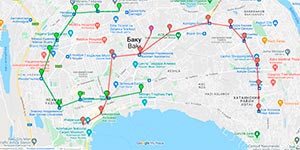
A five-day ISWI workshop will be held in Baku, from 31 October through 4 November 2022. This workshop is being organized by the United Nations Office for Outer Space Affairs in cooperation with the Baku State University. The workshop is supported by the International Committee on Global Navigation Satellite Systems (ICG).
The main objectives of this workshop are to continue efforts in the deployment of instruments in developing nations and interpretation of space weather data; to focus on new research results and findings; and at the same time aim at strengthening international coordination and cooperation on space weather products and services.
The expected outcomes of the workshop will be recommendations for improved collection, exchange and delivery of space weather data, as well as improved operational analysis, modelling and forecasting methods through the promotion of best practices, suggestions of means to improve accuracy, reliability and interoperability.
The discussions at the Workshop will also be linked to the 2030 Agenda for Sustainable Development and to its targets set out for Sustainable Development Goals (SDG). The workshop will contribute to:
The observations and recommendations emanating from the workshop will be disseminated in form of report of the Committee on the Peaceful Uses of Outer Space (COPUOS) to the United Nations General Assembly.
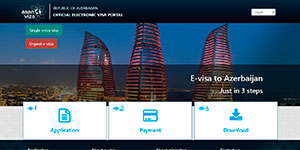
E-visas can be obtained at www.evisa.gov.az at least 3 (three) working days before their planned date of arrival in the Republic of Azerbaijan. Your e-Visa will be valid for 90 days. The e-visa fee is $25 USD, an urgent e-visa is $60 USD and is non-refundable.
The following nationalities can travel to Azerbaijan visa-free:
Azerbaijan’s unit of currency is the Azerbaijani manat (AZN). All major credit cards are accepted.
You may get acquainted with the up to date currency rates via the following link:
Central Bank of the Republic of Azerbaijan - AZN CurrenciesFrom Heydar Aliyev International Airport to Baku State University: 27.6km
Road to the city from Heydar Aliyev International Airport:
Express BusAeroexpress buses run from Terminal 1 and Terminal 2 to the Central Railway Station (Metro “28th May”). For more details: Click here
Airport TaxiOfficial Taxi: Baku Taxi Service LLC
Operation Area: Baku city and Absheron Peninsula Payment method: Cash and Debet/Credit cards.
You can order Official Taxi at Baku Taxi Service Desk located in Meet & Great Area in Terminal 1. For more details: Click here
Metro service operates between 06:00 and 00:00 Hrs. It costs 30 qapik to enter the metro. To use the metro, you should buy a BakiKart or BakiKart for limited use (BakiKart costs 2 AZN, BakiKart for limited use costs 0.3 AZN) card and charge it with as many trips as you wish. To get to Baku State University you need to go to Emler Akademiyasi (Elmlər Akademiyası) station via metro. For more details: Click here
Call 101.
Medical emergenciesCal 103.
PoliceCall 102.
Call 112 for the emergency hotline.
For English-speaking staff, call +944 12 590 9966.
More about Azerbaijan: Click here
Capital Baku (Bakı)
Population (2021 est.) 10,197,000
Form of Government unitary multiparty republic with a single legislative house (National Assembly [125])
Official Language Azerbaijanian
Main Religion (large majority) Islam
Official Name Azərbaycan Respublikası (Republic of Azerbaijan)
Total Area (sq km) 86 600
For information regarding the submission of nominations for attendance and funding, please contact Mr. Patrick Gindler, United Nations Office for Outer Space Affairs, at the following e-mail address: (patrick.gindler@un.org).
For information regarding the workshop programme, please contact Ms. Sharafat Gadimova, United Nations Office for Outer Space Affairs, at: (sharafat.gadimova@un.org).
The focal point for the Baku State University: Mr. Mahir Pirguliyev, Head of Rector’s Secretariat, at: (mahir@bsu.edu.az).
While Baku State University has taken measures to minimize the risk of viral contamination, it is your responsibility to keep yourself safe by following these guidelines.